 ALMUTEM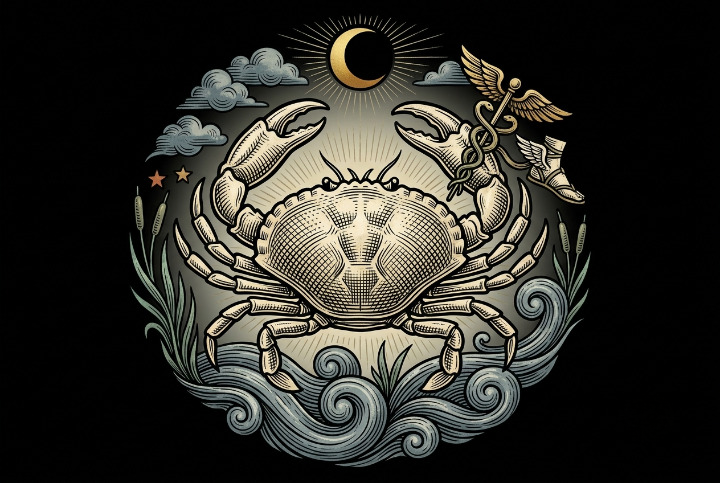
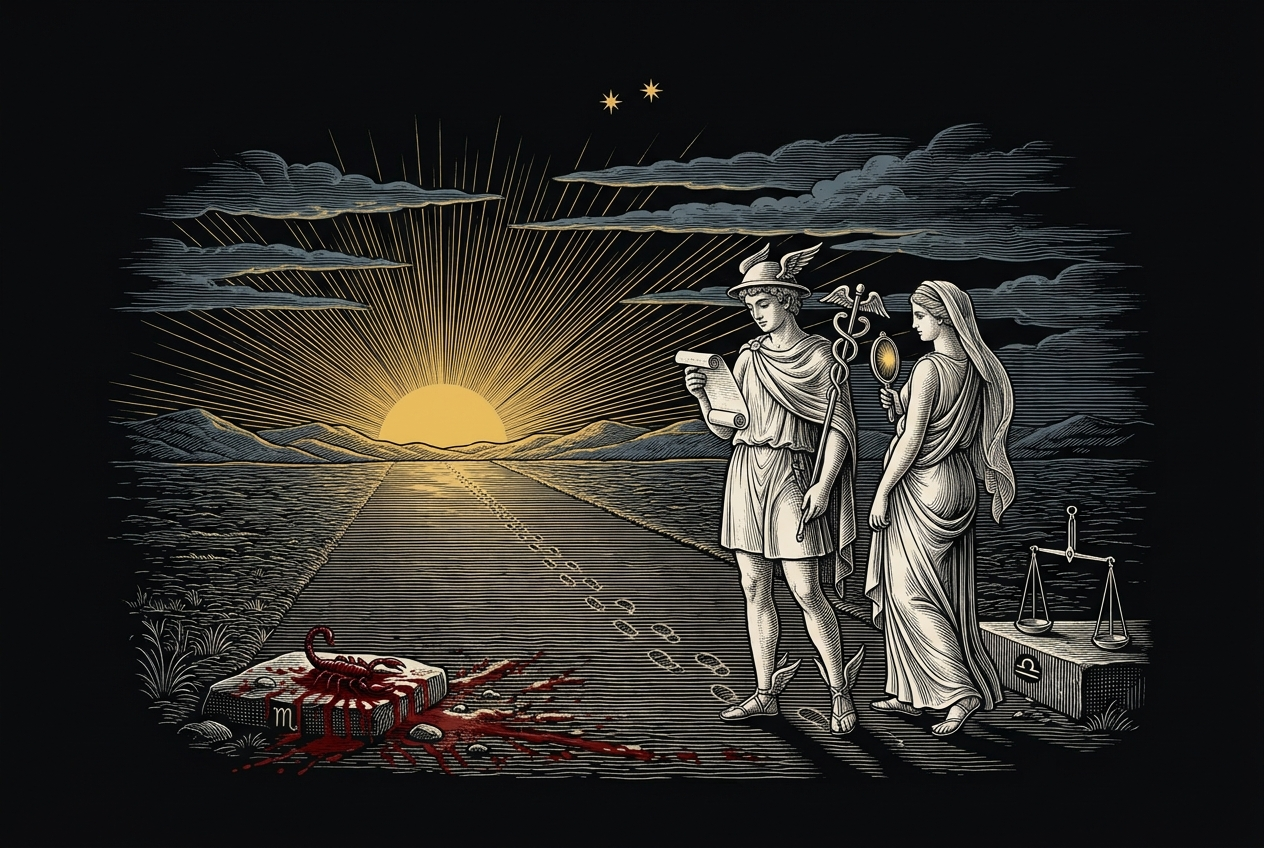
Three or four times a year there is a moment when Mercury seems to hesitate. The planet that governs speech and thought — the swiftest of the seven — slows, comes to a stop, and for a few weeks moves against the current of the zodiac. Astronomy explains it without mystery: it is the Earth that overtakes it, and from where we stand the messenger appears to fall back, the way the landscape slips backward past the window of one who travels faster. But traditional astrology was never content with the motion alone; it always asked after its meaning. And the meaning of a planet that turns back has, from the beginning, been the same: there is a time to go forward and a time to return.
This return begins on 29 June, when Mercury comes to rest upon the twenty-sixth degree of Cancer. There it hangs suspended — the ancients called that moment of stillness the station, and saw in it the point of greatest density in the whole cycle, as though the planet, by stopping, gathered its nature to a single point. Then, slowly, it retraces its path to the sixteenth degree of the same sign, where on 23 July it takes up its forward march again. Twenty-four days, all of them in Cancer: through the whole retreat Mercury never leaves the house of the Moon. And there is a shadow, too — the stretch it crosses three times, once out, once back, once out again — that widens this season from mid-June to the beginning of August.
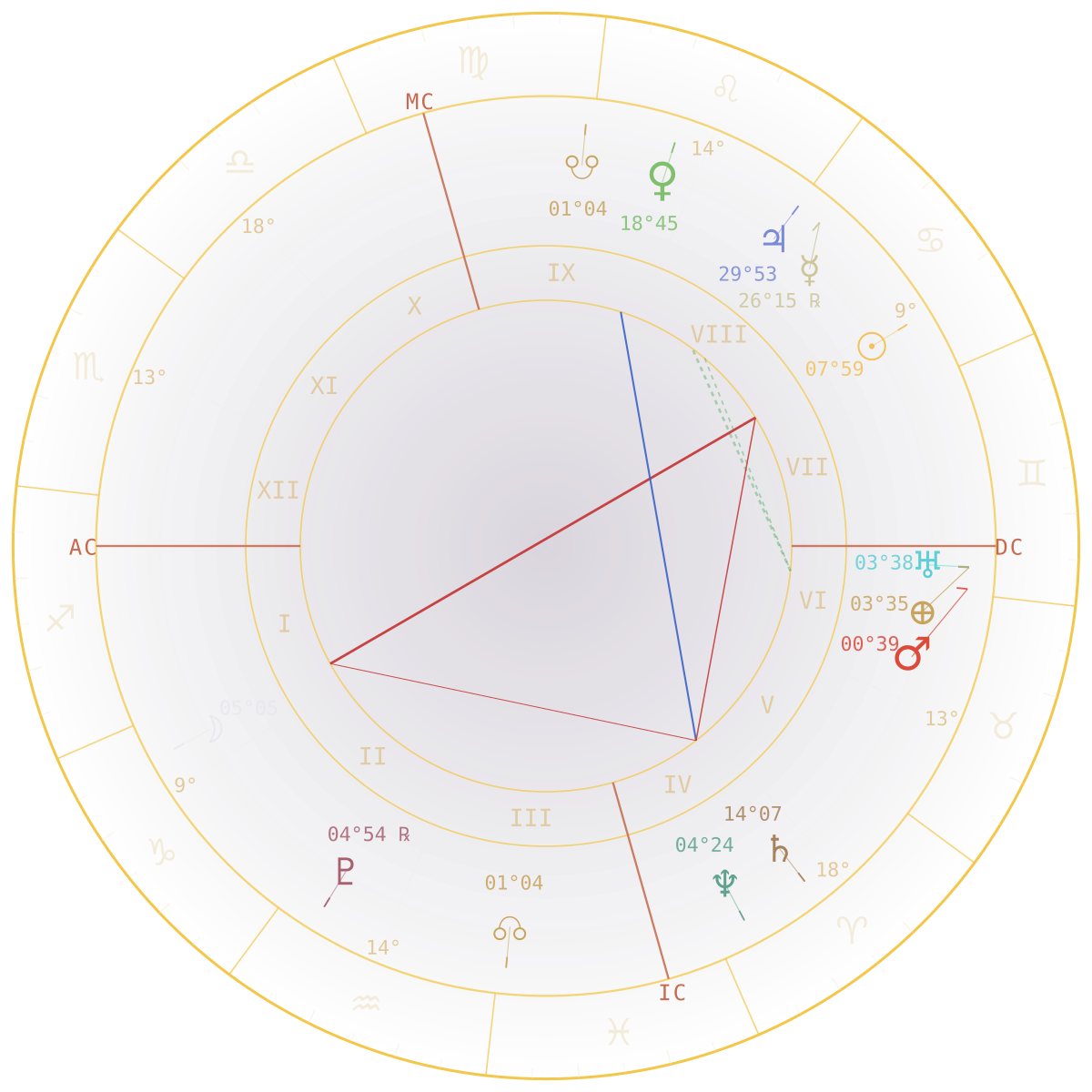
The sky at the moment Mercury stationed, 29 June 2026 — Mercury withdrawn in Cancer, with Venus, Jupiter and the Sun.
That Mercury should withdraw precisely in Cancer is not a matter of indifference. Cancer is cardinal water, the domicile of the Moon, the sign of memory and of home, of roots and of all we keep without noticing. It is the inside of the house and the inside of ourselves. Mercury — dry by nature, quick, a friend to air and to distance — enters here an element that is not its own; it neither rules this sign nor is exalted in it. It moves more slowly, deeper, further in. And when a planet such as this turns back in the sign of what has been, the invitation almost announces itself: do not look only ahead; look also to where you have already stood.
Every retrograde is, at bottom, a meditation on the prefix re-. To review, to reread, to redo, to recall, to reencounter, to reconcile. Tradition tied it not to what begins but to what returns — it is not the season for sowing, but for gathering what was already sown. In Cancer that return has the colour of water: the family conversations that come back to the table, the memories that rise unbidden, the home that asks to be inhabited anew, the old letter reread with different eyes. None of this is an obstacle. It is material — the very material of self-knowledge, which is rarely found ahead and almost always behind.
A word of measure is fitting here, for superstition is always at the door. The sky decides nothing for you, and compels you to nothing. Mercury moving back breaks nothing whatever; it merely tilts time inward, like a tide that withdraws the better to return. And — this matters more than all the rest — no transit is read in isolation. The sky is a single gesture, and the chart is a whole: these same days touch each person according to the place Cancer holds in their map, and according to this Mercury’s dialogue with all the rest of the design. In the sky of the station, moreover, it is not alone — it withdraws in good company, with Venus, with Jupiter and with the Sun itself gathered in the waters of Cancer. To see the shared sky is one thing; to be read in full is another, and it is the second that tells you who you are.
If there is a gesture proper to this time, it is a quiet one: to slow down without guilt, to let what was left behind catch up with you, to listen to what memory brings, to set things in order before beginning again. On 23 July, when Mercury moves forward once more, you do not leave unchanged — you leave with what this withdrawal gave you to review. And perhaps that is the oldest lesson of the planet that turns back: that one also walks forward by learning to return.